FOCUS MAP
The interesting work starts when these layers have to cooperate outside the demo.
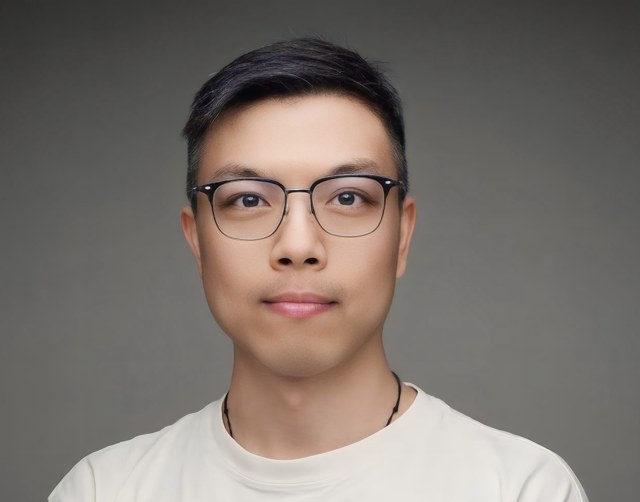
I’m an electronics engineering student exploring where embedded systems, sensors, software, and AI meet the physical world.
FOCUS MAP
The interesting work starts when these layers have to cooperate outside the demo.
DOMAIN NOTE
A Kiwi phrase. A personal URL. A reminder to keep the interface human.
01 / NOW
The things getting most of my attention right now.
LEARNING
From MCU code to observable hardware behaviour.
BUILDING
Small systems where outputs must become real-world state change.
EXPLORING
Automation that earns trust through evidence, reversibility, and clear boundaries.
02 / SELECTED WORK
Embedded coursework, client web delivery and systems research, with evidence and limits for each.
EMBEDDED SYSTEMS · COURSEWORK
Arduino Uno experiments connecting sensor inputs to visible outputs: ultrasonic proximity indication, joystick-driven RGB lighting and state-machine control.
Evidence includes breadboard photographs, submitted C++ and calculator serial results. Hardware accuracy and reliability have not been quantified.
View experiments and evidenceCLIENT WEBSITE · LIVE
A responsive website for an Auckland beauty and bespoke fashion business. Built with plain HTML, CSS and JavaScript, with English and Chinese pages and an enquiry interface.
Public result: a live site presenting both services. Enquiry delivery and final client acceptance are not verified here.
Visit BONNIELASS live siteSYSTEMS RESEARCH · EARLY R&D
Home automation research exploring when a system should act, suggest, ask, or do nothing. Work includes a Python research simulator and software checks under synthetic conditions.
Simulation checks do not establish real household benefit or complete system acceptance. The public overview introduces the project; it is not a test report.
Read MAELE public overview03 / PATH + DEFAULTS
Not a tidy résumé. More like a chain of environments that changed what I notice.
Manufacturing taught me that variance and failure are part of the system, not exceptions to it.
Diagnosing devices with people standing in front of me made edge cases, clarity, and recovery very concrete.
Product perception and market work added another layer: the technical problem is not always the human problem.
Now reconnecting hardware, software, control, and AI with a stronger sense of what has to work outside the demo.
WORKING DEFAULTS
Elegant models still have to answer to evidence.
Useful automation should reduce burden without quietly taking over.
Simpler systems start with an advantage if they can do the job.
Observe→Build→Verify→Repeat
Swimming · Bachata & Urban Kiz · turning daily friction into engineering questions.
04 / CONTACT
If you’re building around hardware, sensing, automation, systems integration, or applied AI, I’m interested in comparing notes — especially where verification matters as much as the demo.
This page stays intentionally light. Deeper project detail belongs on a public project surface when it is ready.